
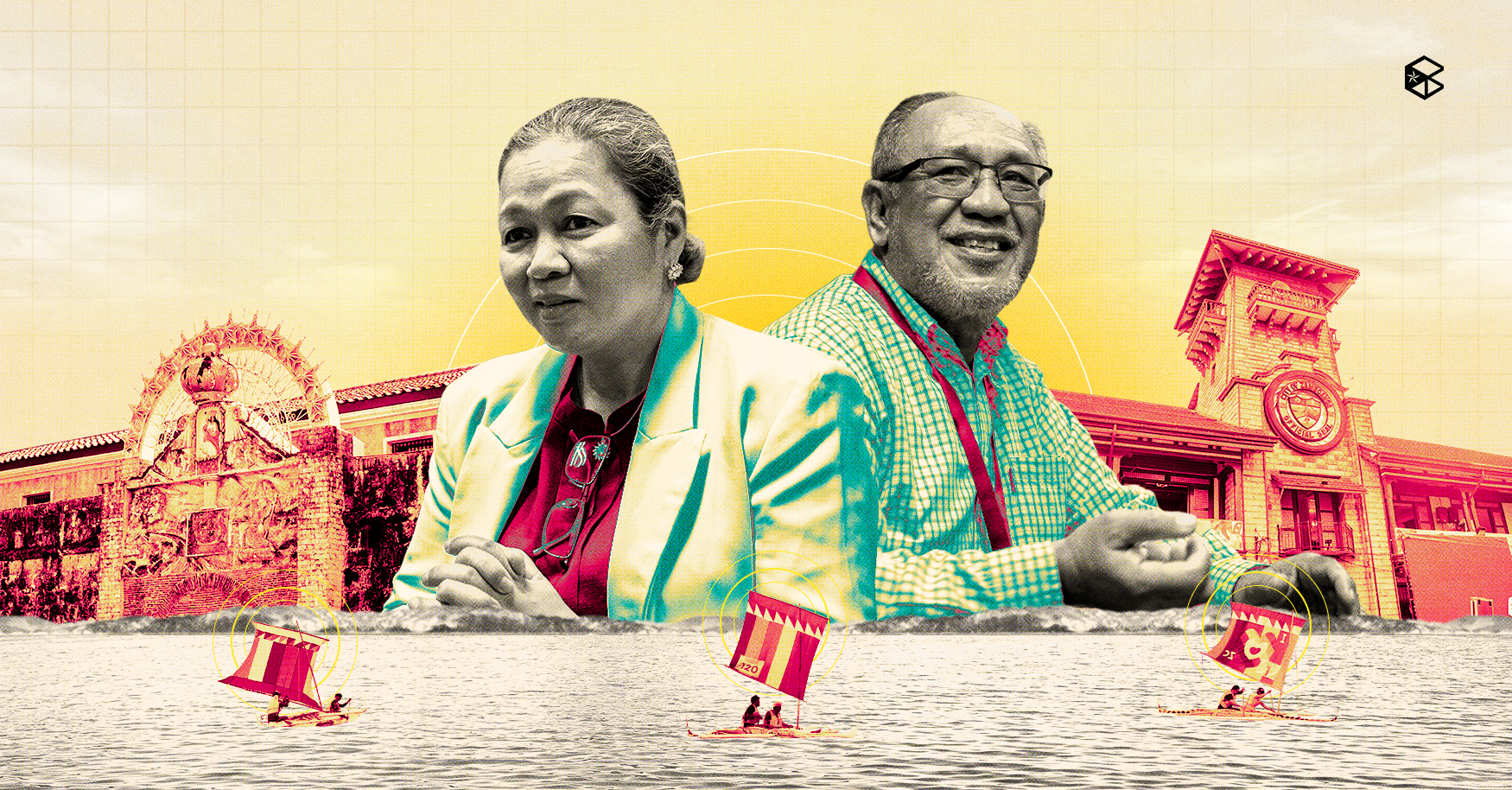




Fort Pilar has stood at the edge of Zamboanga since the 17th century, silently witnessing a language taking shape below its walls. Beyond the fortress, Spanish, Visayan, Cebuano-Hiligaynon, Tagalog, and other linguistic influences mingled through the movements and interactions of the people who called the peninsula home. Through generations of people finding ways to understand one another, Chavacano gradually emerged.
Centuries later, Chavacano remains a defining feature of Zamboanga’s cultural identity. Classified as a Spanish-based creole, the language draws much of its vocabulary from Spanish while incorporating grammatical structures and linguistic influences from Philippine languages. While Spanish and English commonly follow a subject–verb–object sentence structure, Chavacano uses markers such as ya and ta to convey whether an action has been completed or is ongoing, respectively.
But long before Chavacano became a marker of Zamboangueño identity, it was molded by the everyday exchanges of people who did not necessarily share the same language. Their encounters unfolded in a shifting social landscape shaped by settlement, migration, and interactions among different communities. These circumstances brought forth a language that would eventually form part of Zamboanga’s cultural identity.
The roots
Now an integral part of Zamboangueño identity, Chavacano emerged from the need to communicate across languages. Its origins can be traced back to 1635 during the establishment of the Real Fuerza de San José, now known as Fort Pilar.
In an exclusive interview with The Benildean, Hezekiah Concepcion, a historian who teaches at Ateneo de Zamboanga University (AdZU), shared that the fort’s construction marked both the beginning of an organized Spanish settlement and the period in which Chavacano began to take shape. “Although you cannot put the exact date, historians and the local community agree that with the establishment of Fort Pilar, the foundation of Chavacano was also developed,” he explained.
While it may be a point in the language’s birth, he emphasized that Chavacano emerged gradually through interactions among people who needed to overcome language barriers. “It started as a Pidgin language and then it developed into a Creole because eventually the children of those Pidgin speakers […] started to speak a coherent form of the language which evolved into Chavacano,” he explained.
Mr. Concepcion described the language’s genesis as a pidgin—a simplified mix of language that people used to communicate with one another. In Zamboanga’s case, that mixture drew on Spanish, Visayan, Cebuano-Hiligaynon, and Tagalog. As the children of the early speakers began learning and using it, it evolved into a creole, developing into a more stable and structured form.
He also drew attention to the role of liberated slaves who resettled in Zamboanga, carrying experiences that offered another perspective on its origins. “So many of those freed slaves at the height of the slave raiding activities of the local sultanates, the freed slaves were settled or resettled here in Zamboanga,” he stated. “It was overlooked in the historical discourse that those freed slaves also contributed probably to the evolution of the Chavacano.”
Drawing on the work of historian James Francis Warren, Mr. Concepcion explained that some of these slaves came from different parts of the archipelago, including the Visayas region, Ilocos, and Pampanga. After years in captivity, some had lost familiarity with their native languages, and so found new ways to communicate with those around them. Their interactions may have contributed to Chavacano’s development, as Zamboanga was never a city of one people.
It’s important to note, however, that Chavacano’s history cannot be separated from the people who inhabited the peninsula long before Spanish colonization. “But of course you have to acknowledge the presence of the other communities because before the coming of the Spaniards, there were already local communities there. You have the Sama Bajau or sometimes we call them Lutaw,“ he explained.
Over time, cultural exchange and migration further sculpted Zamboanga into a pluralistic society where different groups maintained their own languages and traditions alongside the growing prominence of Chavacano.
Language called home
To speak Chavacano is to carry a piece of Zamboanga’s history in day-to-day conversations. But for those who call the city home, belonging is not always as straightforward as knowing the language.
Dr. Claribel Concepcion, an applied linguistics professor at AdZU, described Chavacano as inseparable from her own sense of self. As a native speaker who has also studied the language academically, she sees it as more than a means of communication. “We cannot let go of this identity because it’s tantamount to losing who we are as a people,” she said in an exclusive interview with The Benildean.
For her, identity is also closely tied to one’s sense of place. Someone born in Zamboanga may not speak Chavacano fluently, but the name itself still carries weight. “If you call someone a Chavacano, even if the person does not speak the language as a mother tongue, the language can be spoken or [can be] understood by people,” she said, emphasizing that the word still points to an inheritance shared by its people.
Being born in Zamboanga does not automatically make Chavacano one’s mother tongue. Dr. Concepcion acknowledged that some people born and raised in the city speak other languages instead. While Chavacano remains closely associated with Zamboangueño identity, a person’s connection to the city can extend beyond the language they speak. In a city where Tausug, Sama, Subanen, and other communities maintain their own languages and traditions, belonging cannot be measured by Chavacano fluency alone.
Meanwhile, Mr. Concepcion emphasized that this diversity is something the city must continue to nurture. “We have to admit that although this is historically a Hispanic Zamboangueño-Chavacano city, through the years, we have seen the migration and settlement of non-Chavacano-speaking [and] non-Christian populations. And this makes our city stronger, open, [and] tolerant,” he said.
Words left behind
In many Zamboanga classrooms today, English remains a primary language of instruction, alongside Filipino. For many families, that choice is practical. Dr. Concepcion explained that many families often believed that these languages would help them adjust to school and prepare for future opportunities.
She added that some parents prefer to prioritize languages used in formal education, under the assumption that their children can just learn Chavacano later from their friends. However, this becomes more difficult when children grow accustomed to communicating primarily in English or Filipino.
“The more the children get engaged in these languages, the more they prefer these languages because of ease,” Dr. Concepcion said.
For her, the concern is what happens when fewer children grow up speaking Chavacano. As fewer learn the language at home, preserving it requires more deliberate effort. Without children passing it onto the next generation, Chavacano risks losing its place in everyday family life.
English, meanwhile, continues to hold considerable influence because of its role in education and employment. Dr. Concepcion acknowledged its practical value, noting that proficiency can open doors to economic mobility and provide access to a wealth of information. However, she warned that these advantages should not come at the expense of local languages.
“It's a global language, but it's also a global killer,” she said, referring to English's potential to marginalize other languages when it becomes overwhelmingly dominant.
Language carried forward
Keeping Chavacano alive requires schools, universities, local institutions, and the wider community to have a role in making the language part of the youth’s everyday experiences. Mr. Concepcion believes the principle of “letting students participate rather than simply spectate,” should be applied to the preservation of local languages, wherein young people need the opportunities to use them.
For both educators, the path forward is not to reject English or Filipino, but to make room for Chavacano alongside them. As Dr. Concepcion put it, “do not let go of Chavacano and even other languages.” She urged speakers to continue using their languages and create materials that can preserve their knowledge for future generations.
Dr. Concepcion noted, “Language is power. The more languages we know, the better it is for us. Understanding a person in one language means understanding one soul, but understanding a lot of people—because we understand their different languages—means understanding different souls.”
Institutions have a role to play in keeping Chavacano alive, given that a language cannot be sustained by its speakers alone if the spaces around them leave little room for its growth.
For some, home is a place. For others, it is the sound of a familiar voice speaking in a language that needs no translation. In Zamboanga, Chavacano has long been part of that familiarity. Shaped by centuries of encounters, the language has been passed down through generations, becoming part of everyday life for people who may never have known how it first emerged.
For all the history held within its words, Chavacano’s future may rest in something as simple as hearing it spoken at home.
