
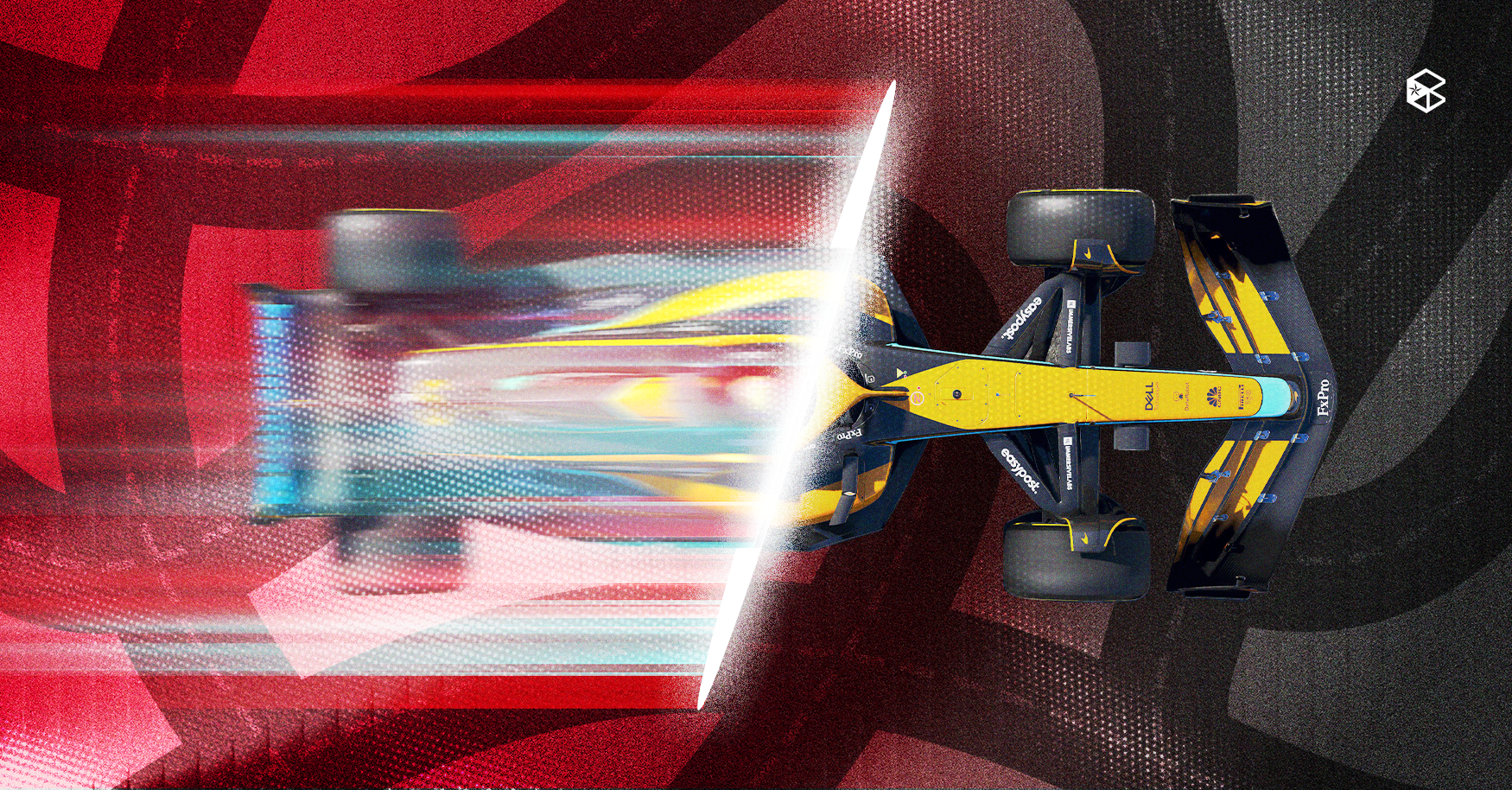




Formula 1, one of motorsport’s premier racing series, introduced significant regulatory changes that reshaped both the technical and competitive landscape of the sport beginning 2026.
Engineered for a New Era
For the first time in over a decade, F1 is running on an entirely new power unit. The 1.6-litre V6 turbo hybrid remains, but power delivery has shifted sharply, with the electric motor tripling output for a near 50-50 combustion-electric split. The cars also run on Advanced Sustainable Fuels to support F1’s push toward carbon neutrality by 2030.
The new power unit gives greater control to the drivers through three distinct energy deployment modes. The Boost mode offers maximum combined power from the engine and battery. Meanwhile, Overtake mode provides a surge of extra electrical energy when a car is following within one second of the car ahead. Finally, Recharge mode enables drivers to recover energy through braking or lifting the throttle. This demanding new mode makes energy management a critical tactical element that could be as decisive as outright speed.
The 2026 cars have undergone significant changes—they are now shorter, narrower, and lighter. A reduced wheelbase improves cornering responsiveness, while narrower Pirelli tires cut drag and weight. Long ground-effect tunnels have been replaced by flatter floors with extended diffusers and larger openings. This reduces downforce while opening more setup options across the grid. Furthermore, both the front and rear wings are simpler, incorporating fewer elements.
Life without DRS
The Drag Reduction System (DRS), a fixture since 2011, was removed. In its place is Straight Mode as part of the new aerodynamics system. On straights, the front and rear wing flaps move to an open position and flattening to reduce drag and increase top speed. In the corners, the flaps return to their default closed position to maintain downforce and grip. Unlike DRS, this was available to every driver on every lap, removing the one-second proximity requirement that previously governed its use.
22 and counting
Cadillac’s arrival brings the total number of teams on the grid to 11 and 22 cars for the first time since 2016. This expansion carries a direct consequence for the qualifying format. The three-part elimination structure remains, but with 22 cars now competing, six will be eliminated in both Qualifying 1 and 2 instead of five. Qualifying 3 remains unchanged, but with the top ten fighting for positions at the front of the grid.
Powering the Future
Mercedes-AMG PETRONAS F1 Team proved to be a powerhouse on the grid with George Russell and Kimi Antonelli dominating the track with two 1-2 podium finishes in just four races. In his second year in the league, Antonelli made history by becoming the first driver to convert his first three-pole positions into race wins. Mercedes established a commanding start in the season, finding themselves on top of the Constructor’s Championship standing with 180 points.
Last year’s Constructor’s Champion, McLaren Mastercard F1 Team, entered the season with reigning World Champion Lando Norris and teammate Oscar Piastri who had endured a slow start. Even though Norris finished fifth in the Australian Grand Prix, Piastri suffered a heartbreaking Did Not Start (DNS) in his home race after losing control of his car and crashing into the concrete wall lining of the track. In Round Two, both drivers failed to start (DNS) in the Chinese Grand Prix due to electrical issues that ended the team’s weekend. Since then, both drives bounced back with Piastri finishing second in the Japanese Grand Prix and Norris in fifth. McLaren also boosted their campaign in the Miami Grand Prix with Norris in second and Piastri placing third on the podium.
Scuderia Ferrari HP returns with hopes of ending its long title drought behind Charles Leclerc and seven-time World Champion Lewis Hamilton. Hamilton and Leclerc finished fourth and fifth respectively in the Australian Grand Prix, marking a better start to where they were last year. In China, Hamilton claimed his first bronze with Ferrari, while Leclerc also finished fourth. Both drivers have since then finished in one of the top 10 spots and are currently in second place of the team standing.
Oracle Red Bull Racing with its new engine partner, Ford, and drivers Isack Hadjar and four-time World Champion Max Verstappen opened with early struggles in tough race weekends and difficulty in matching the pace of other cars. Team Principal Laurent Mekies said Red Bull requires “a 360 improvement” in order to be a strong contender. Although the team and its drivers have garnered a few points, they still aim to be the same dominant force they’ve been in the past seasons.
Team Performance
Four rounds into the 2026 season, the new regulations have produced a striking shake-up at the top. Mercedes leads the standings on 180 points with Antonelli as the driving force. Ferrari sits second on 110 points, and McLaren at third with 94 points. Further back, Red Bull with 30 points, continued to wrestle with fundamental balance issues that have left them well off the pace—a surprise for a team that has dominated recent seasons.
Early Season Adjustments
Ahead of the Miami Grand Prix, the Fédération Internationale de l'Automobile (FIA), the governing body of F1, introduced new adjustments primarily on energy management within the current hybrid power unit regulations. One of the key issues in the opening races was Super Clipping, which refers to the action of cars in full throttle while still actively harvesting energy. This led to significant slowdowns and unpredictable pace shifts.
In response, the FIA adjusted energy recovery limits for qualifying. The maximum recharge rate was reduced from 2.2 kWh to 1.9 kWh, while peak recharge power was increased from 250 kW to 350 kW. This is to shorten the time spent harvesting energy per lap and make energy deployment consistent and smoother.
Another change caps Boost Mode at 150 kW to prevent large speed differences between cars when using hybrid deployment, especially in high-speed sections and overtaking scenarios. Additionally, MGU-K deployment used for storing energy will also be limited to 350 kW in corner exit to braking and overtaking zones, then capped at 250 kW for the rest of the lap.
Finally, race starts will feature a new “low power start detection” system. If a car launches unusually slowly after clutch release, the system automatically provides a small hybrid power assist to maintain safe acceleration without creating an advantage.
The 2026 regulations have ushered in a new, genuinely unpredictable era for F1. As the grid expanded to 22 cars, rebalanced aerodynamics, and a new power unit that prioritizes energy management over sheer speed, the season's outcome is wide open. Nothing is guaranteed for any driver or team. This new era has already made its mark, redefining the sport, and what unfolds next will determine the champion.
