
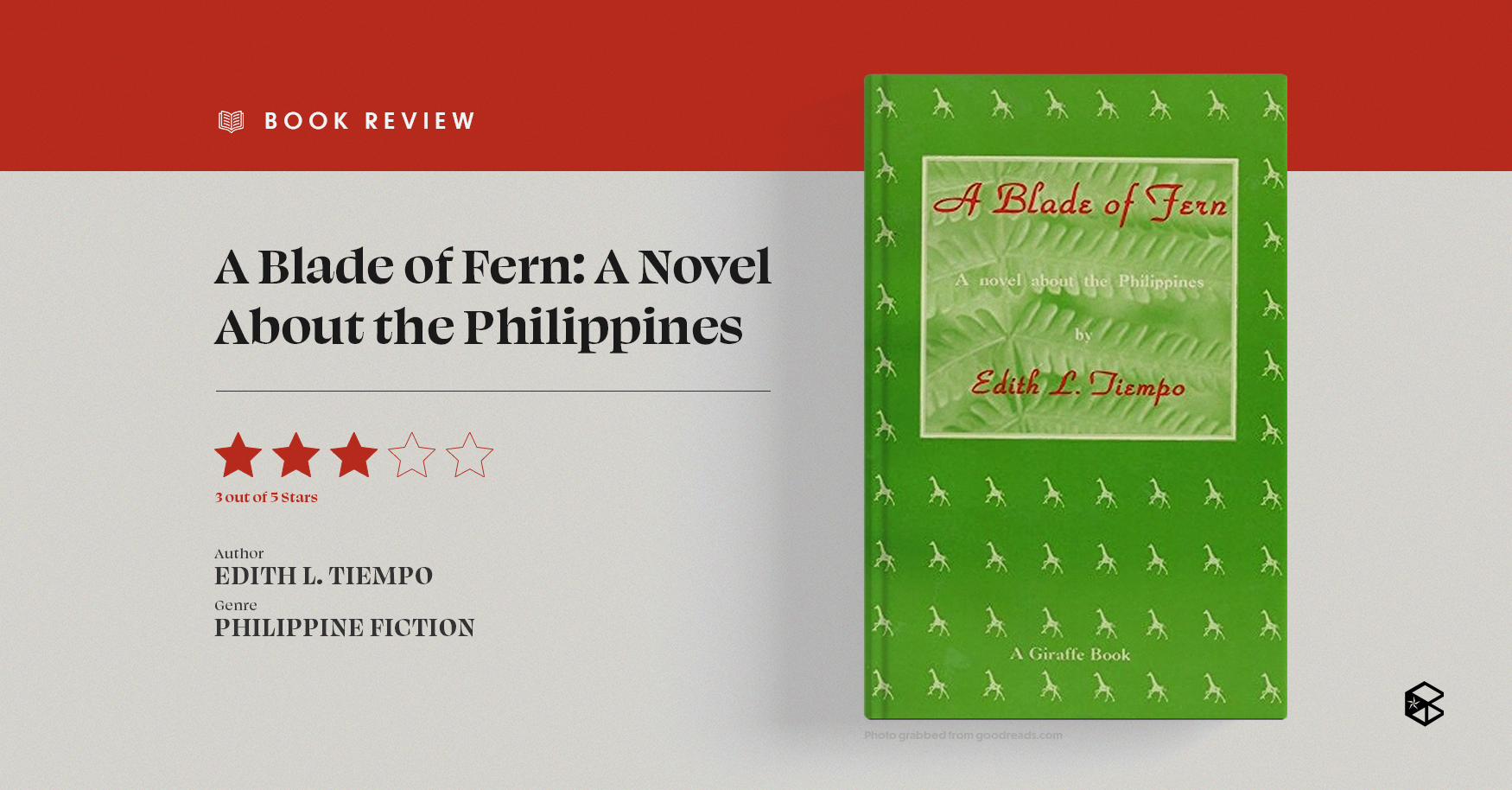




Title: A Blade of Fern: A Novel About the Philippines
Author: Edith L. Tiempo
Genre: Philippine Fiction
Rating: 3/5
As a National Artist for Literature renowned for her vivid imagery and heartfelt prose, Edith L. Tiempo contributed to modern Philippine literature by reminding us of the intricacies and beauty that come with living in it. As solace is sought in a hurried life, “A Blade of Fern” welcomes us to the picturesque mining village of Nibucal, introducing a community in the Southern Philippines.
In search of a life beyond the bustling cityscape, the novel follows Bernardo, a hardworking miner searching for gold, as he gradually settles into Nibucal and accepts it as his newfound home. There, he becomes immersed in the fresh air and the familiar touch of leaves, discovering true treasure in nature and community.
The poetic commentary of nature
In the story, the Philippines is expressed and embodied through a poetic lens of its natural environment. As emotions are accompanied by descriptions of the soft breeze and rustling trees, the connection between people and nature deepens, revealing the importance of scenery in human life. In expressing the essence of humanity, nature also defines the world through its own presence. Without excuse, the narrative allows itself to be understood and felt alongside the ever-growing surroundings.
This descriptive sentiment highlights the skill and dedication of the author toward romantic prose—writing that weaves deep feeling into vivid and distinctive natural experiences. Its focus on emotional and existential themes helps keep readers grounded, encouraging them to become more aware of and connected to the environment, especially to what the country has to offer. By showing how nature can be a place where one feels at home, the novel further emphasizes the importance of what truly matters.
The reality of Philippine community
As we follow Bernardo’s footsteps, readers are given a glimpse of the village through his experiences and encounters with others. Beyond those who are close to him, characters from different backgrounds, personalities, and priorities are presented, revealing the variety and complexity of individual livelihoods. The limited plot places greater emphasis on natural interactions and the simplicity of everyday living. It focuses less on a concrete narrative and more on the immersion in living as one truly is.
Through the in-depth portrayal of emotions in the story, the characters’ vulnerabilities and struggles are also revealed. Conflicts between people are common and realistic, making them a recurring theme throughout the narrative. However, beyond interpersonal conflict, the novel also explores the struggle between people and nature—an aspect that is often overlooked, seen in the risks and hardships of the mining industry, which are present in the narrative as readers walk in a miner’s shoes. The story also addresses the safety and health of the community, reminding them to care for those who matter most. In this way, the novel shows how people try to look out for one another, especially those they love.
With the story’s goal of representing the Philippines, one may then wonder whether the characters truly and accurately depict the nation. Through the curious connections between neighbors, the deep relationships among those close to one another, and the enjoyment of experiencing nature together, the characters display awareness of each other and express complex emotions. Their interactions flow naturally, making the experience feel like walking through a village.
In the end, “A Blade of Fern: A Novel About the Philippines” by Edith L. Tiempo presents a vision of the Philippines that is serene and deeply connected to its landscape. It suggests that one can step away from the busyness of the world and focus on what truly matters: nature, community, the people we love, and a deeper understanding of ourselves.
“A Blade of Fern: A Novel About the Philippines” is available for purchase online through Amazon.
