
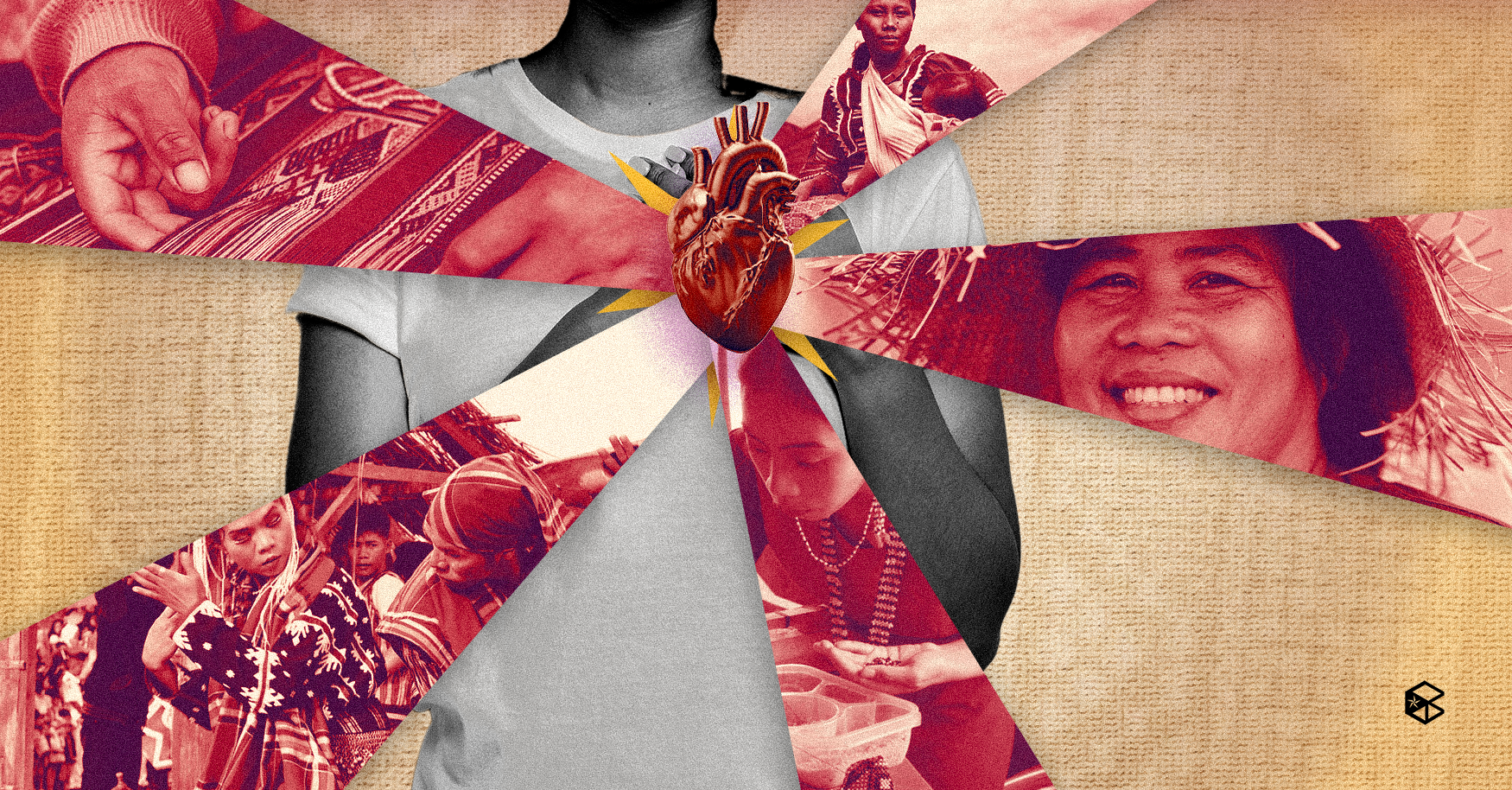




The Philippines’ rich and abundant weaving culture sets it apart from the rest of the world, with local fibers like Abaca and Piña reflecting both heritage and identity. These fabrics are not merely just fabrics, they are stories shaped by the hands of Filipina weavers who preserve traditions while adapting to change and modernization driven by our ever-growing economy.
Threads of resistance and history
The roots of weaving are deeply intertwined with both global and local histories. International Women’s Day itself traces back to labor and suffrage movements, including the 1917 “Bread and Peace” revolution led by Russian women textile workers, seeking an end to World War I and food shortages.
In the Philippines, weaving predates colonization and has served both functional and cultural purposes. Early communities wove fibers for clothing, trade, and rituals, along with this purpose came deep cultural significance, with patterns symbolizing tribal identity and spiritual beliefs. It evolved into a form of storytelling that transcends words.
From handwoven Banig mats made from Buri to delicate Piña fabrics, Philippine textiles reveal the diverse and localized heritage shaped by an archipelagic landscape.
A tradition passed through women’s hands
Weaving in the Philippines has historically been a domestic activity, often practiced within the home. As a result, it became closely associated with women, who balanced weaving with caregiving and household responsibilities. Mothers then passed it down to their daughters, embedding the craft within the family lineages.
In an interview with The Benildean, Ms. Judith Basco, textile artist and instructor at DLS-CSB, shared that this transmission was not simply about technique but about continuity, “A single textile will tell you about their story, the culture of their people, the materials found in their environment.” In some communities—like the T’boli dreamweavers—where weaving is even more connected to women, with the patterns believed to come from their dreams gifted by Fu Dalu, the goddess of Abaca, resulting in the sacred handwoven fabric of South Cotabato, T’nalak.
While men also participate in weaving, women have largely remained at its forefront, serving as both artisans and cultural bearers. Their role reflects a broader societal expectation of women as nurturers—preserving not only families but also traditions.
From indigenous looms to modern hands
Despite its deep roots, weaving has gradually become less accessible to younger generations, largely due to economic pressures and limited institutional support. Many traditional weavers are aging, and fewer people are taking up the craft.
Yet, weaving is finding new life through non-traditional practitioners. Basco herself began as a self-taught weaver, transitioning from a career in advertising to fiber arts in 2018. Without access to the traditional floor loom, she started with a small, portable frame loom—which shows how weaving can adapt to modern context. What began as a personal hobby evolved into teaching workshops, making the craft more accessible to eager learners and hobbyists.
This shift shows that weaving is no longer confined to rural communities or traditional setups. It can exist anywhere, opening doors for a new generation to engage with heritage in their own way.
Preservation through community and innovation
Efforts to preserve Philippine textiles have also taken institutional action. Non-government organizations like HABI: The Philippine Textile Council, work to promote local weavers and support the communities within them. Through fairs and programs, HABI provides platforms—many of them women—to showcase their work, learn market skills, and gain financial empowerment.
As explained by Ms. Maribel Ongpin, founder of HABI, in an interview with The Benildean, their goal is not only recognition but empowerment. By creating demand for textiles, these initiatives encourage communities to continue weaving and pass the craft on. She also emphasized the importance of modernization, by improving production processes, labeling textile compositions accurately, and exploring new approaches to make them more accessible and marketable.
Preservation is not about freezing tradition in time, it involves adaptation—integrating new techniques that would further help in maintaining cultural integrity.
Weaving the future, one thread at a time
At the heart of Philippine weaving communities are the women who sustain it. Whether in rural communities or urban settings, they continue to shape the craft—balancing tradition with innovation, and artistry with livelihood. Behind every intricate pattern lies a story of labor, creativity, and the enduring role women play in cultural preservation.
As we celebrate Women’s Month, let this be a reminder of the women behind the weave—whose hands not only preserve tradition, but continue to shape the future.
